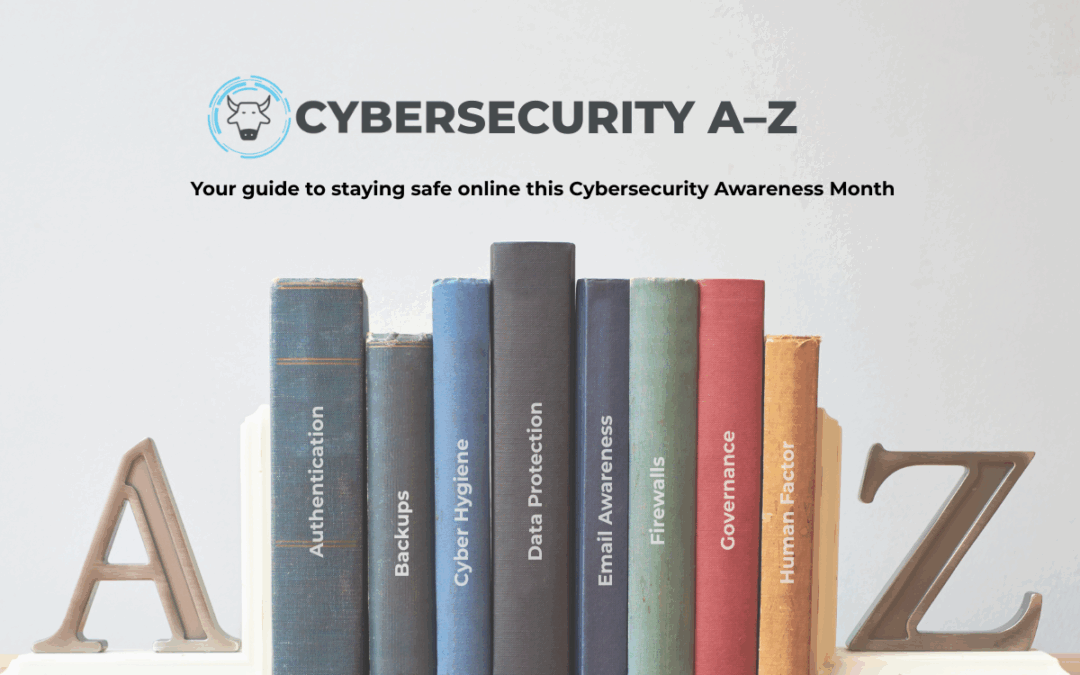
October is Cybersecurity Awareness Month and there is no better time to brush up on your knowledge and practices. Whether you are an individual, part of a small business, or a growing startup, cybersecurity is everyone’s responsibility. Here is our A-Z guide to help you stay informed, safe, and proactive.
A – Authentication
Passwords are your first line of defence. Use strong, unique passwords for each account and enable multi-factor authentication. It may feel like extra work but it keeps both you and your organisation safer.
B – Backups
Regularly back up your data. Cloud and local backups can save you from potential disasters. A good backup is your safety net.
C – Cyber Hygiene
Keep devices, apps, and systems updated. Even small updates prevent vulnerabilities from being exploited.
D – Data Protection
Know what data you handle and secure it properly. Personal information, financial records, and client data all need attention from your inbox to your servers.
E – Email Awareness
Phishing is still the easiest way for attackers to get in. Check sender details carefully, avoid suspicious links, and when in doubt, verify.
F – Firewalls
Hardware or software, firewalls are essential shields. Make sure yours are enabled and configured correctly.
G – Governance
Cybersecurity is not just IT’s responsibility. Clear policies and roles help everyone know how they contribute to a safe digital environment.
H – Human Factor
People are often the weakest link. Training and awareness campaigns can make a huge difference.
I – Incident Response
Prepare for the unexpected. A tested plan ensures your team knows what to do if a breach occurs.
J – Just-in-Time Training
Short, timely tips help retention. Quick videos, infographics, or reminders are more effective than long one-off sessions.
K – Key Management
Protect cryptographic keys, passwords, and access credentials. Mismanaged keys are an easy route for attackers.
L – Least Privilege
Give people and systems only the access they need. Limiting permissions reduces potential damage from breaches.
M – Monitoring
Watch systems, networks, and user activity. Early detection prevents bigger incidents.
N – Network Security
Secure Wi-Fi, use VPNs, and segment networks. Good network hygiene is crucial.
O – Outsourcing Awareness
Third-party suppliers and contractors can be weak points. Vet them carefully to ensure standards align with yours.
P – Phishing Simulations
Simulated attacks are an effective training tool. Awareness in practice beats theory every time.
Q – Questions & Curiosity
Encourage teams to speak up if something seems suspicious. Curious questions often prevent incidents before they happen.
R – Risk Assessment
Identify and prioritise risks regularly. Understanding your threats helps allocate resources wisely.
S – Software Updates
Updates are your friends. Cybercriminals exploit unpatched systems, so keep everything current.
T – Threat Intelligence
Stay informed about emerging threats. Sharing insights keeps everyone ahead of attackers.
U – User Education
Training is not just for IT. Everyone, from interns to executives, should understand their role in cybersecurity.
V – VPNs
Protect data in transit, especially on public networks. A VPN can be a simple but powerful shield.
W – Wi-Fi Security
Encrypt networks and avoid unsecured public Wi-Fi. Strong passwords make a big difference.
X – Xenial Culture
Create an open, friendly culture where staff feel comfortable reporting mistakes. A positive culture is key to safety.
Y – Your Role
Cybersecurity is everyone’s responsibility. Small actions, like recognising phishing or updating passwords, collectively make a huge difference.
Z – Zero Trust
Assume no one or nothing is automatically safe. Verify every device, user, and connection before granting access.
Key Takeaways
Cybersecurity is about people, processes, and habits. By applying these A-Z tips, you strengthen both your organisation and personal security every day.
October is Cybersecurity Awareness Month but these practices matter all year round. Share this guide with your teams, colleagues, and the wider Thames Valley cyber community. Together, we make digital spaces safer.