In 2026, the traditional idea of a “headquarters” has changed forever. For many businesses across the Thames Valley, the most valuable assets are no longer kept in a physical safe in a building in Reading, Milton Keynes or Oxford. They are kept in the “Invisible Office”: the cloud.
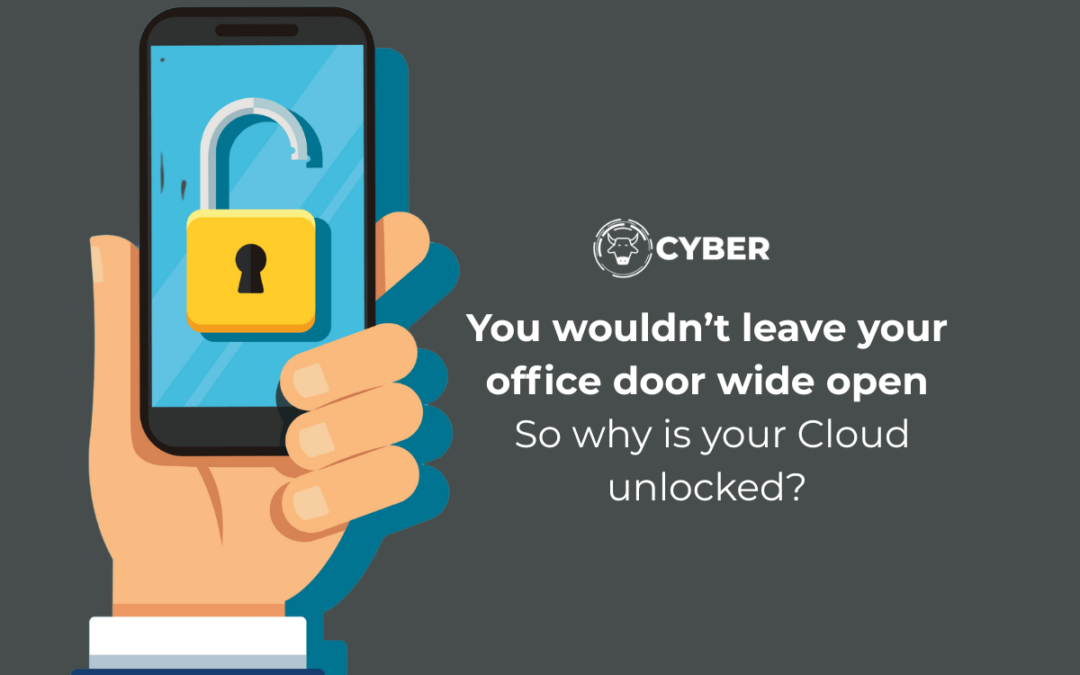
If you were moving your team into a new physical office, you would check the locks. You would issue fobs to the right people. You would make sure the windows were secure before leaving for the weekend. Yet, when it comes to the cloud, many organisations treat their digital real estate like an open park rather than a private office.
The Shared Responsibility Trap
One of the biggest misconceptions we see in 2026 is the “Safety Assumption.” Many leaders assume that because they pay a global provider like AWS, Microsoft, or Google, the security is “taken care of.”
Think of this like renting a high-end office suite. The landlord is responsible for the structural integrity of the building, the lift maintenance, and the front gate security. However, if you leave your own office door wide open, leave sensitive files on the communal printer, or hand out fobs to unvetted contractors, the landlord cannot protect you.
In the cloud, this is called the Shared Responsibility Model.
• The Provider is responsible for the security of the cloud (the physical servers, the data centres, and the underlying cooling/power).
• You are responsible for security in the cloud (your data, your users, and who you allow through the front door).
Physical Habits for a Digital Space
Securing your Invisible Office requires a shift in mindset. We need to apply our physical security instincts to our digital environments. Here are three ways to do it:
1. Digital Fobs (Identity and Access Management) In a physical office, you wouldn’t give every junior employee or external contractor a master key to the server room. The same applies to the cloud. We use the principle of “Least Privilege”: give people access to exactly what they need to do their jobs and nothing more. In 2026, identity is the new perimeter. If your “fob” system is weak, your entire office is at risk.
2. The “Clear Desk” Policy Just as you wouldn’t leave sensitive client contracts sitting on a cafe table, you shouldn’t leave unencrypted data sitting in public cloud “buckets.” Data should be classified. If it is high-value or contains personal information, it should be behind an extra layer of “digital glass” that requires specific permission to break.
3. Surveillance and Motion Sensors (Monitoring) If an alarm went off in your physical office at 3:00 AM, you would expect a phone call. Does your cloud environment have the same “motion sensors”? In 2026, AI-driven monitoring can act as your digital night watchman, alerting you to unusual data movement or login attempts from unfamiliar locations before the “burglary” even happens.
The Business Impact: Trust as a Tenant
Why does this matter beyond the IT department? Because in the Thames Valley’s competitive economy, your cloud security is now a part of your brand.
B2B clients are no longer just asking for your price list; they are asking for your “building’s” security credentials. They want to know that if they trust you with their data, you aren’t leaving it in a virtual hallway with no locks. High-value partnerships are built on the confidence that your Invisible Office is as secure as your physical one.
A 3-Step “Walkthrough” for Your Cloud Office
Before you sign off for the week, take five minutes to “walk through” your digital real estate:
• Audit the Keys: Who has “Admin” access to your cloud? Is it more people than absolutely necessary?
• Check the Windows: Are any of your cloud storage folders set to “Public”?
• Test the Alarm: When was the last time you ran a simulated “incident” to see how quickly your team reacts?
At OxCyber, we believe that national resilience starts with local responsibility. When a local business secures its cloud environment, it strengthens the entire UK supply chain. The Invisible Office is where your future growth lives. It is time we started locking the doors properly.