
The UK’s Digital Security Is No Longer Optional
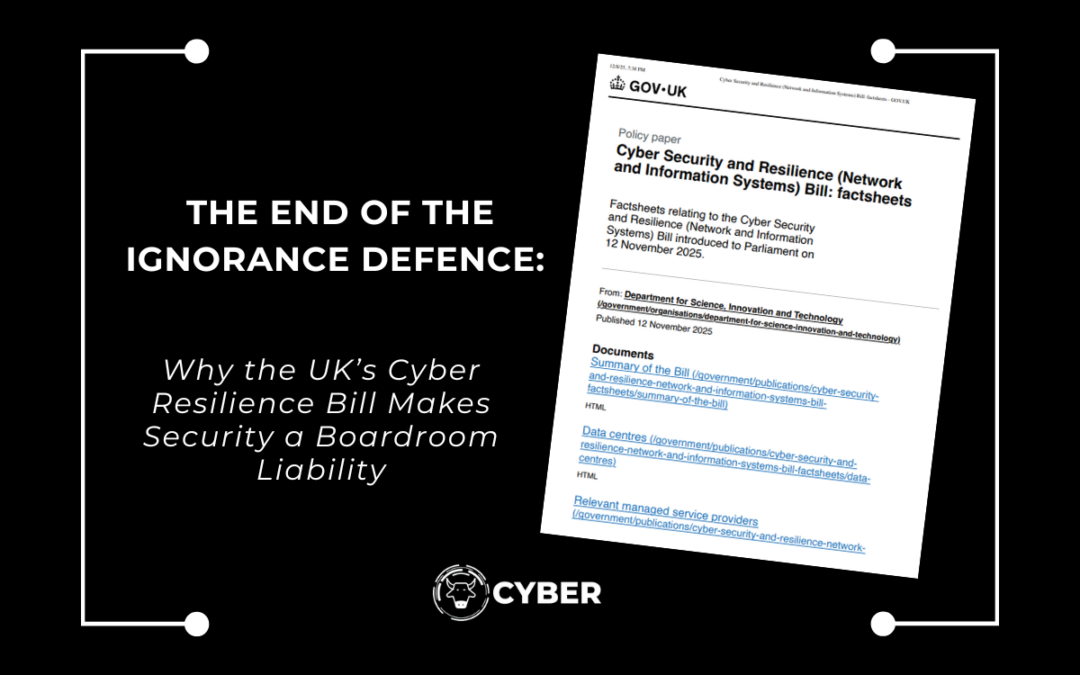
The Cyber Security and Resilience Bill (CSRB), introduced in the UK Parliament on November 2025, marks the most significant shift in UK cyber governance since the 2018 NIS Regulations. This is not just another regulatory update. It is a legal mandate that changes how digital risk is managed across the Thames Valley and the nation. The era when senior management could delegate cyber risk and plead ignorance is officially over. Under the CSRB, cyber security is now unequivocally a board-level accountability.
The Digital Moat Is Gone: Expanded Scope and Accountability
The Bill broadens the regulatory reach beyond traditional Operators of Essential Services (OES).
• Managed Service Providers (MSPs): For the first time, IT management and help desk providers are regulated. They are often the gateway into enterprise systems and a key risk vector.
• Data Centres: Recognised as part of Critical National Infrastructure (CNI), with added security obligations.
• Designated Critical Suppliers: Regulators can designate third parties, like diagnostic labs or chemical suppliers, as ‘critical’, placing direct security duties on previously unregulated entities.
For OxCyber members, this means your supplier’s cyber posture is now legally your own. Continuous monitoring and diligence are no longer optional. They are expected.
Operational Whiplash: Stricter Reporting Timelines
The CSRB introduces new pressures for incident response:
• 24-Hour Initial Notification: Regulators and the NCSC must be informed within 24 hours of a significant incident.
• 72-Hour Full Report: A detailed report must follow within 72 hours.
Without automated detection and response capabilities, meeting these timelines is challenging and carries serious non-compliance risk.
The Price of Failure: Turnover-Based Penalties
Non-compliance can now result in fines up to £17 million or 4% of global turnover, whichever is higher. This sends a clear message: cyber risk is financial risk and the board is accountable. Cutting corners is no longer cheaper than doing the right thing.
Call to Action for Thames Valley Leaders
The CSRB is not a checklist. It is a framework for proactive resilience. Organisations in financial services, healthcare, and CNI sectors should act immediately:
1. Audit the Supply Chain: Stress-test MSPs and critical suppliers. Demand continuous assurance.
2. Update IR Governance: Ensure Incident Response plans meet the 24/72-hour reporting threshold, with legal and executive integration from minute one.
3. Educate the Board: Use the CSRB to secure budget, training, and strategic oversight.
At OxCyber, we see the UK’s cyber defence line moving from the perimeter to the boardroom. Resilience is no longer best practice. It is a legal and financial imperative.