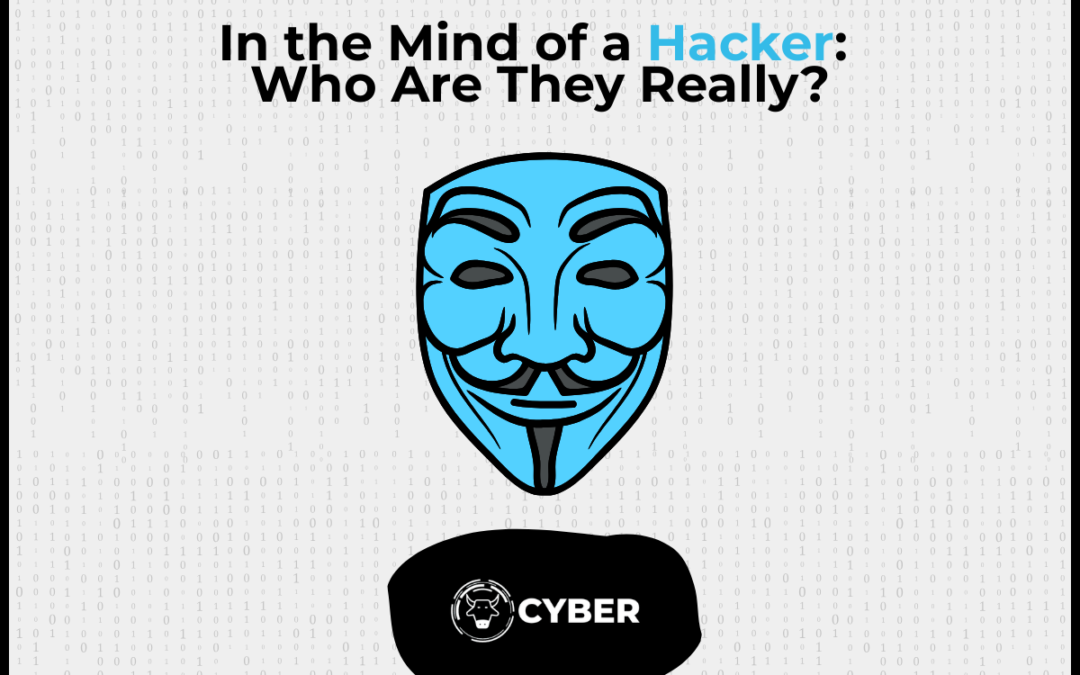
Ever wondered what a hacker is thinking before they hit “send” on a malicious script or a phishing email? It’s easy to imagine a hooded figure in a dark room, a faceless villain from a 90s thriller but the reality is far more nuanced. In the world of cybersecurity, “hacker” is a broad job description that covers everything from bored teenagers to military-grade intelligence officers.
Understanding the mind behind the attack isn’t just a psychological exercise; it is one of the fastest ways to stop an intrusion before it starts. By breaking down threat actors into specific profiles, we can move away from “panic mode” and toward a strategy of defending smarter, not harder.
In this deep dive, we’ll explore the common profiles stalking the digital landscape, what drives them, and most importantly how organisations in the Thames Valley and beyond can shut the door on them.
1. The Opportunist: The “Window Shopper” of Cybercrime
The Opportunist is rarely a mastermind. They are often amateurs driven by curiosity, a desire for a “quick win,” or simply the thrill of seeing if they can break something. Think of them as the person walking through a parking lot checking car door handles. They aren’t looking for a specific car; they are looking for the one that was left unlocked.
Their Motive: Low effort, high ego, or small-scale financial gain.
Their Methods: They exploit “low-hanging fruit.” This includes unpatched software, default passwords (like admin123), and poorly configured cloud storage.
The Psychological Profile: They want maximum results for minimum effort. If they hit a wall, they usually move on to an easier target.
Defence Tip: Patch and harden the basics first. If you lock your “digital doors” with Multi-Factor Authentication (MFA) and regular software updates, the Opportunist will likely head to your neighbor instead.
2. The Financially Driven Actor: The Professional Thief
This is the profile we see most often in the news. These are organised, goal-oriented criminals who view hacking as a 9-to-5 job. They aren’t interested in your data for its own sake; they are interested in how much you’ll pay to get it back.
Their Motive: Cold, hard cash.
Their Methods: They are masters of Phishing, Business Email Compromise (BEC), and Ransomware. They use psychological manipulation (social engineering) to trick employees into clicking links that deploy encrypting malware.
The Psychological Profile: Business-like and ruthless. They calculate the “Return on Investment” (ROI) of an attack. If your company looks like it has a high payout and weak defenses, you’re on their hit list.
Defence Tip: Layered detection is key. Since they rely on human error, regular employee training paired with advanced email filtering can reduce “click rates” and limit the blast radius of an attack.
3. The Insider: The Enemy Within
The Insider is perhaps the most dangerous profile because they already have the keys to the castle. This could be a disgruntled employee, a bribe-taking staff member, or even a negligent contractor.
Their Motive: Revenge, financial desperation, or sometimes just pure carelessness.
Their Methods: They use their legitimate access to exfiltrate sensitive data, sabotage systems, or plant “logic bombs” that trigger after they leave the company.
The Psychological Profile: Emotional and targeted. Unlike the Opportunist, the Insider knows exactly where the “crown jewels” are kept.
Defence Tip: This is where tech meets HR. You must monitor privileged access and implement the “Principle of Least Privilege” (giving people only the access they need to do their jobs). Pair this with clear exit processes for departing staff.
4. The Nation State (APT): The Invisible Ghost
Advanced Persistent Threats (APTs) are the heavy hitters. These are state-sponsored groups with virtually unlimited budgets and time. They aren’t looking for a quick buck; they are looking for intellectual property, political leverage, or a “backdoor” into critical infrastructure.
Their Motive: Geopolitical advantage, espionage, or strategic disruption.
Their Methods: They use custom-built tools, Zero-Day vulnerabilities (bugs no one knows about yet), and Supply Chain attacks (infecting a software vendor to get to that vendor’s customers).
The Psychological Profile: Patient and disciplined. They are happy to sit quietly in your network for years, gathering data without being noticed.
Defence Tip: You can’t fight a Nation State alone. This requires investment in high-level threat intelligence, organisational resilience, and cross-sector collaboration.
5. The Grey Hat: The Uninvited Auditor
Grey Hats sit in the middle of the ethical spectrum. They might break into your system without permission, but instead of stealing data, they’ll email you to tell you how they did it, sometimes asking for a “bug bounty” or a job in return.
Their Motive: Ego, ethics (in their own view), or the desire to improve security.
Their Methods: Vulnerability scanning and creative exploitation.
The Psychological Profile: They see themselves as the “good guys” who use “bad” methods to prove a point.
Defence Tip: Don’t lead with a lawsuit. Build a relationship with the security research community. Having a Responsible Disclosure Policy allows these researchers to tell you about your flaws safely, rather than posting them on a public forum.
Why This Matters for Thames Valley Organisations
The Thames Valley is a hub for innovation, technology, and high-value business. This makes our local ecosystem a “high-reward” zone for hackers. However, when we map these attacker profiles to our specific local risks, we stop guessing and start building practical defences that actually work.
Being part of a local cyber community gives you the edge. It’s about more than just software; it’s about:
Real Intelligence: Knowing which profiles are currently targeting businesses in your sector.
Real Connections: Having a network of peers to call when something looks “off.”
Real Action: Moving from theoretical fear to a concrete security posture.
Understanding the mind of the hacker is the first step. The second step is making sure your organisation isn’t the “open car door” they are looking for.