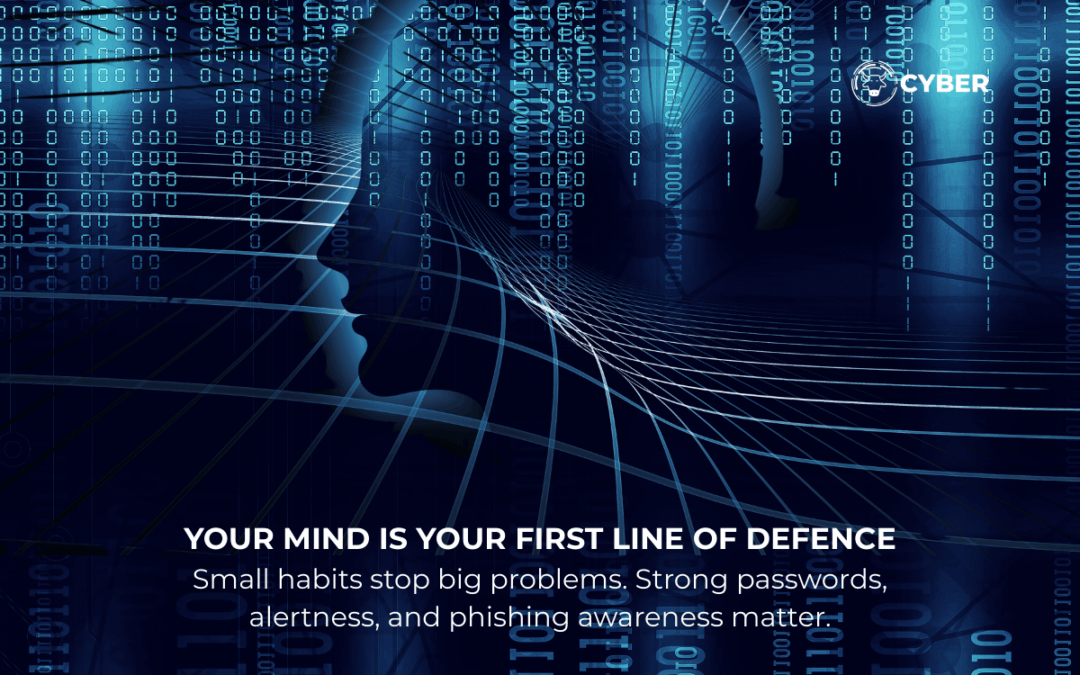
Cybersecurity is often seen as a tech problem. Firewalls, AI-powered detection, and advanced software dominate the conversation. The truth is your mind is often the first and most effective line of defence.
Many cyber incidents start not with a sophisticated hack but with a simple human decision such as clicking a link, reusing a weak password, or ignoring an alert. Understanding how we think, and form habits can transform how organisations approach cyber hygiene.
Why Human Behaviour Matters
Humans are predictably unpredictable. Cognitive biases and shortcuts that help us navigate daily life can leave us vulnerable online.
• The Trust Bias: We tend to trust familiar names and emails. This is why phishing emails often succeed. A staff member might click a link from what looks like a known supplier.
• The Convenience Bias: Easy-to-remember passwords or skipping updates feels efficient but increases risk. People often choose convenience over security, leaving doors open to attackers.
• The Overconfidence Effect: Believing “this will not happen to me” can lead to ignoring alerts, bypassing procedures, or dismissing unusual activity.
By recognising these tendencies, organisations can design cyber hygiene strategies that work with human behaviour rather than against it.
The Numbers Behind Human Error
According to the UK’s National Cyber Security Centre (NCSC), phishing was involved in over 70 percent of incidents reported by UK organisations in 2023. Weak passwords and outdated software remain among the top vulnerabilities (ncsc.gov.uk).
These figures show that the human element is often the key factor in preventing cyber incidents.
Practical Steps to Align Cyber Hygiene with Human Behaviour
1. Make Security Easy: Use password managers and single sign-on systems to reduce friction and encourage strong passwords.
2. Reinforce Good Habits: Regular micro-training sessions keep staff aware without overwhelming them. Short, practical reminders often work better than long, technical lectures.
3. Simulate Real Scenarios: Phishing tests and tabletop exercises help teams practice responding to incidents safely. Experience builds confidence and sharpens instincts.
4. Provide Immediate Feedback: People learn best when mistakes are caught and corrected quickly. A quick discussion or alert after a near-miss can prevent larger problems.
5. Celebrate Positive Behaviour: Recognising staff who spot suspicious activity reinforces a security-first mindset and encourages others to follow suit.
Building a Human-Centred Cyber Culture
Creating a culture that supports good cyber habits is just as important as technical defences. Organisations can:
• Embed cyber awareness into daily routines. Small reminders or short sessions reinforce good habits.
• Encourage open reporting of suspicious activity without fear of blame.
• Reward positive behaviour, from reporting phishing emails to adhering to security protocols.
• Ensure leadership models good practices, as staff often mirror senior behaviour.
Focusing on human behaviour complements technical controls. Organisations that integrate cognitive insights into cyber hygiene often see fewer incidents and faster responses.
Small, consistent habits combined with awareness of cognitive blind spots can prevent big problems. Cybersecurity is not just about software. It is about the people using it.
Need guidance on strengthening the human side of cyber defences? Join our social and online sessions to make cybersecurity second nature.