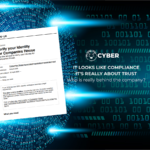
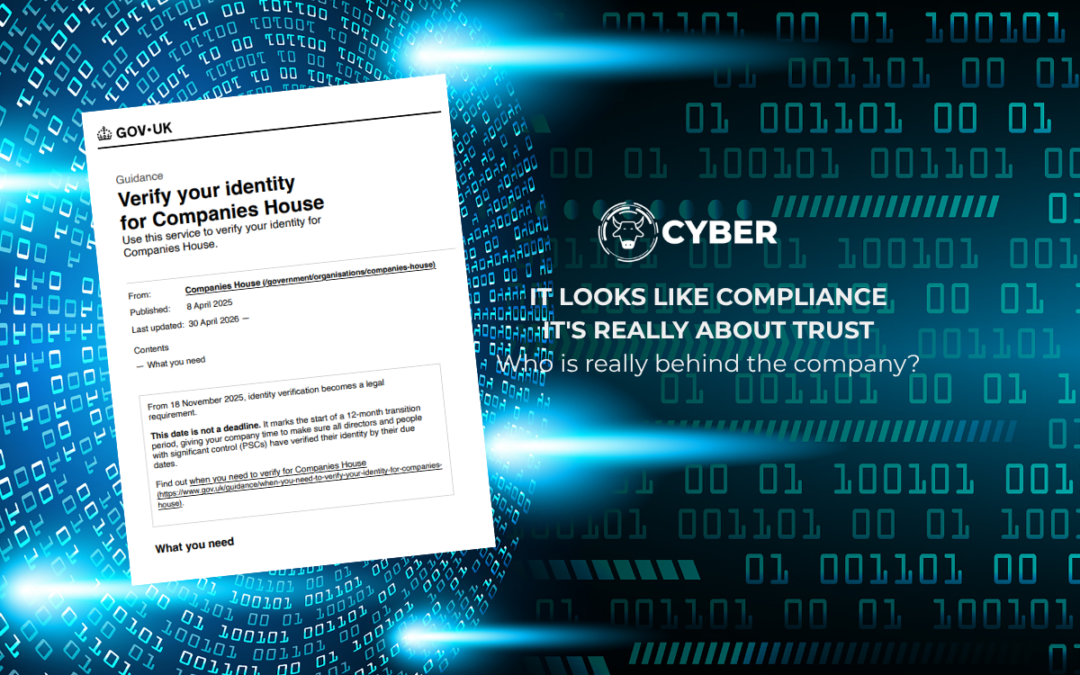
It looks like compliance paperwork. But look closer and there’s a cybersecurity story hiding underneath.
On 17 November 2026, the 12-month transition period for Companies House identity verification comes to an end.
And if you’re a UK company director, founder, PSC or adviser, this deserves your attention.
But first, an important clarification: 17 November is not everyone’s individual verification deadline. Companies House says identity verification became a legal requirement on 18 November 2025, with directors and people with significant control required to complete the process according to their own applicable due dates.
So why does this matter to cybersecurity?
Because the real question isn’t simply:
“Has the form been completed?”
It’s:
“Can we trust who is behind the company?”
From company registration to identity security
The reforms were introduced under the Economic Crime and Corporate Transparency Act 2023, with Companies House explicitly linking identity verification to tackling the misuse of UK company structures.
Companies House expects to verify 6 to 7 million individuals during the transition year.
And the scale matters.
The UK had more than 5.5 million companies registered at the end of June 2026.
For criminals, corporate structures can provide credibility.
A company number can make a business appear legitimate.
A legitimate-looking website can create trust.
A convincing email can open the door.
And a fraudulent identity can sit behind it all.
Identity verification doesn’t eliminate corporate fraud. But it adds another barrier between criminals and the legitimate-looking companies they may try to exploit.
The warning every SME should read
Companies House itself warns:
Do not let others use your identity.
Criminals can potentially use someone’s identity to establish or run a company, take out loans or create debt in their name.
That makes identity verification more than an administrative task.
It is part of the wider fraud prevention and corporate trust ecosystem.
What should SMEs do now?
Don’t wait for November.
✓ Check who needs to verify
✓ Check each person’s individual due date
✓ Complete identity verification through the official route
✓ Keep Companies House personal codes secure
✓ Review directors and PSC information
✓ Make sure your confirmation statement obligations are understood
✓ Never share your identity credentials with someone you don’t trust
Cybersecurity isn’t only about protecting systems.
Sometimes, it’s about making sure you know who is behind the system, the company and the transaction.
Is your business ready for the next stage of Companies House identity verification?