There was a time when a ringing phone was just a ringing phone.
You answered it.
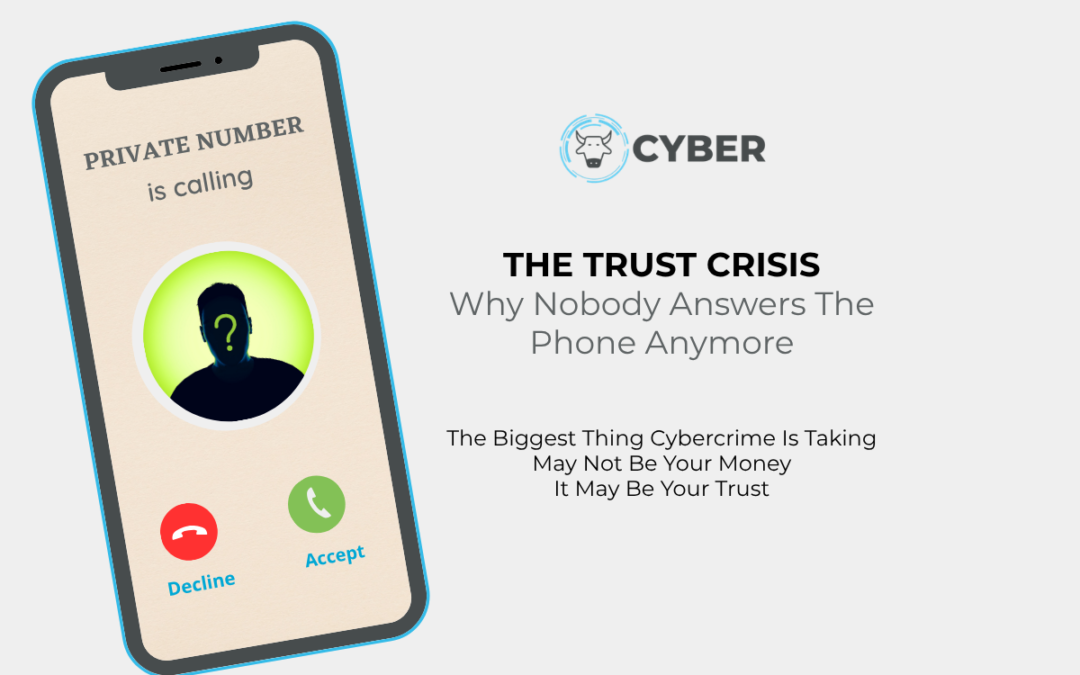
Today, an unknown number appears on your screen and your first instinct is suspicion.
You let it ring.
You wait for a voicemail.
You search the number online.
Or you ignore it completely.
Sound familiar?
You’re not alone.
Years of scam calls, phishing attempts, fake banking alerts, delivery scams, and impersonation fraud have trained us to be cautious. That’s a good thing.
But it’s also creating a problem we rarely talk about.
Cybercrime Is Changing How We Live
When we think about cybercrime, we usually focus on financial losses, ransomware attacks, and data breaches.
But there is another impact.
It’s changing our behaviour.
Many of us no longer trust unexpected communications.
Not calls.
Not texts.
Not emails.
And increasingly, not even people.
The Calls We’re Missing
The irony is that while we’re trying to avoid scammers, we sometimes avoid everyone else too.
A recruiter calling about a job opportunity.
A hospital confirming an appointment.
A school trying to contact a parent.
A delivery driver needing directions.
A customer returning a call.
The problem is that legitimate calls often look exactly like the fraudulent ones we’ve been warned about.
So we ignore them.
Just in case.
The Cost Nobody Measures
Cybercrime is usually measured in pounds, dollars, and breached records.
But what about trust?
Every scam call pretending to be a bank.
Every phishing email impersonating a colleague.
Every fraudulent text claiming to be a delivery company.
Each one chips away at our confidence.
Over time, trust becomes harder to give and easier to lose.
That’s a cost no dashboard can accurately measure.
Why It Matters
Trust is what makes communication work.
It’s what allows businesses to connect with customers, recruiters to connect with candidates, and organisations to engage with the people they serve.
When trust disappears, communication becomes harder for everyone.
And that’s exactly what we’re seeing.
A Final Thought
The next time your phone rings from an unknown number, pay attention to your first reaction.
If it’s suspicion rather than curiosity, you’re probably not alone.
The biggest impact of cybercrime may not be the money it steals.
It may be the trust it takes with it.