For years, ransomware followed a familiar playbook.
Attackers broke into a network, encrypted critical systems, and demanded payment in exchange for a decryption key.
It was disruptive, costly, and damaging. But at least organisations understood the threat.
Today, that playbook has changed.
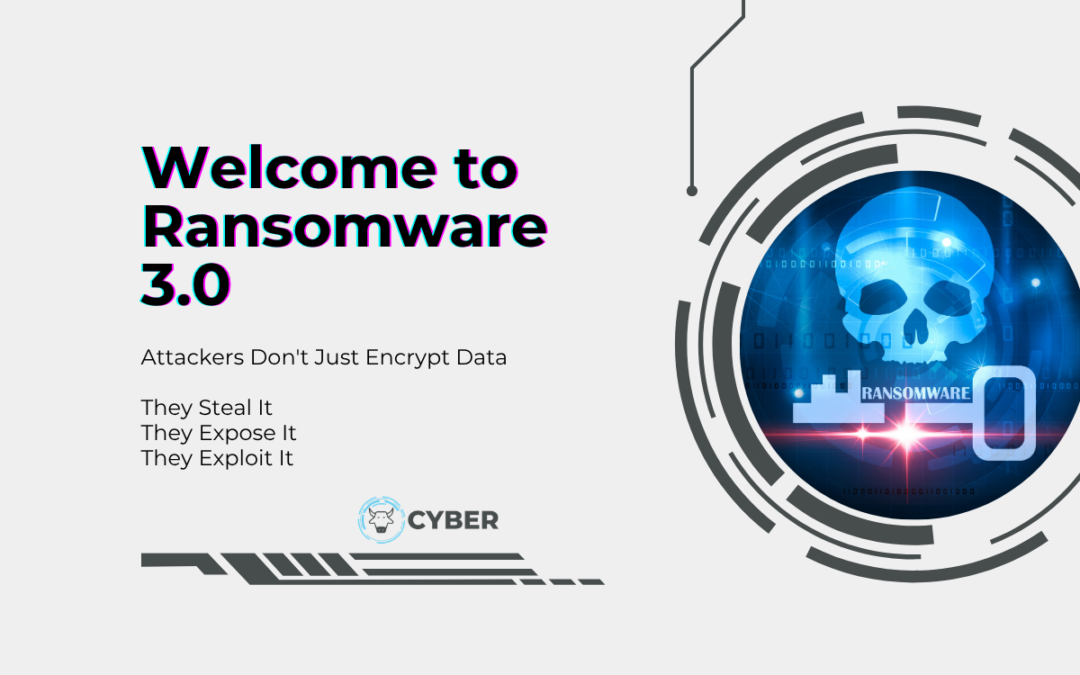
Modern ransomware groups are no longer relying solely on encryption. They are stealing sensitive data, threatening public exposure, using deepfake technology to increase pressure, and targeting individuals within organisations to maximise their chances of getting paid.
Welcome to Ransomware 3.0.
The Evolution of Ransomware
The first wave of ransomware focused on locking organisations out of their systems.
The second wave introduced double extortion. Attackers not only encrypted data but also stole it, threatening to publish sensitive information if the ransom wasn’t paid.
Now we’re entering a third phase.
Attackers are becoming more sophisticated, more personal, and more aggressive in how they apply pressure.
The goal is no longer simply to disrupt operations. The goal is to create enough fear, embarrassment, financial impact, or reputational damage that paying the ransom feels like the easiest option.
More Than Just Data Encryption
Today’s ransomware attacks often begin long before encryption takes place.
Attackers spend time inside networks identifying sensitive information, intellectual property, financial records, customer data, and executive communications.
In many cases, the stolen data becomes more valuable than the encrypted systems themselves.
Even organisations with strong backups can find themselves facing difficult decisions when confidential information is at risk of being exposed publicly.
The Rise of Deepfake Blackmail
Artificial intelligence is adding a new dimension to ransomware.
Cybercriminals are increasingly experimenting with deepfake technology to create convincing audio and video content.
Imagine receiving a video that appears to show a senior executive discussing confidential information, or an audio recording that sounds exactly like a member of your leadership team.
Whether genuine or fabricated, the threat of releasing such content can create significant pressure during a ransomware negotiation.
As AI tools become more accessible, organisations should expect these tactics to become more common.
Why Critical Industries Are Being Targeted
Healthcare, manufacturing, and critical infrastructure remain prime targets.
The reason is simple.
Downtime in these sectors has immediate real-world consequences. Every hour of disruption can affect patient care, production schedules, supply chains, or essential services.
Attackers understand that organisations facing operational pressure may feel compelled to pay quickly.
Unfortunately, this makes critical industries particularly attractive targets.
The Question Every Organisation Should Ask
Many organisations invest heavily in prevention, and rightly so.
But what happens if an attack succeeds?
Who makes the decisions?
How will systems be isolated?
How will customers, employees, regulators, and stakeholders be informed?
How quickly can operations be restored?
These questions should be answered before an incident occurs, not during one.
Three Actions to Take Today
1. Review Your Incident Response Plan
A ransomware response plan should be documented, tested, and understood by key stakeholders.
2. Protect and Test Backups
Backups remain one of the most effective defences, but only if they can be restored quickly and reliably.
3. Assume Data Theft Is Part of the Attack
Modern ransomware is often as much about stolen information as encrypted systems. Prepare accordingly.
Final Thoughts
Ransomware is no longer just a technology problem.
It has become a business resilience challenge involving operations, reputation, legal considerations, communications, and leadership decision-making.
The organisations that recover most effectively are not necessarily those that avoid every attack.
They are the ones that have prepared for the day an attack succeeds.