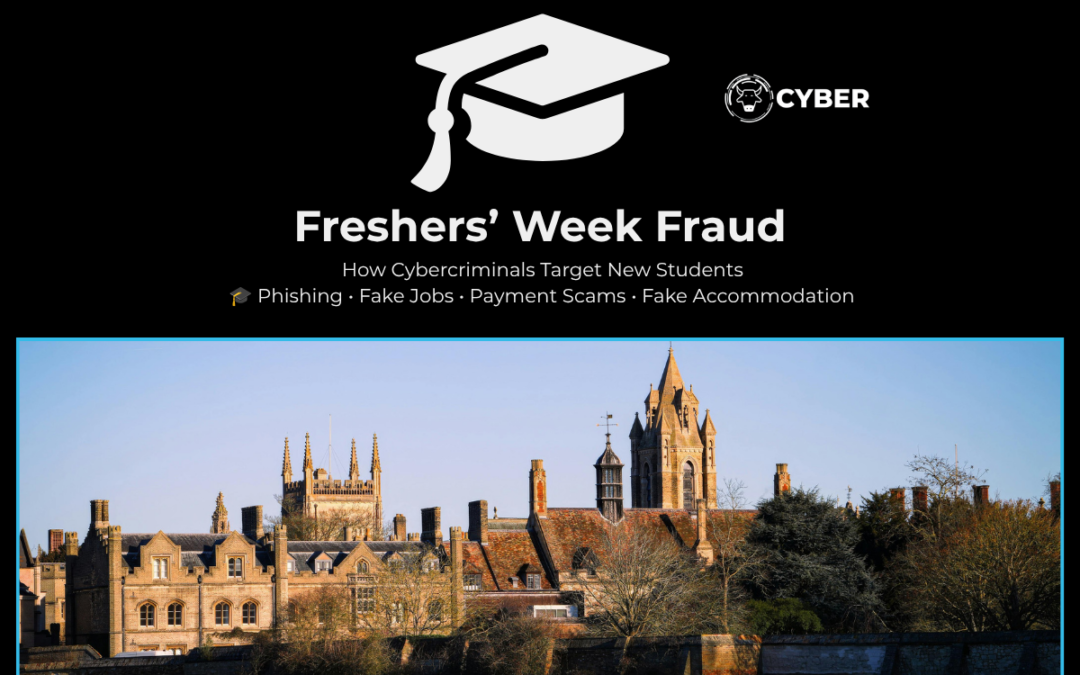
Every September, the Thames Valley fills with removal vans, nervous parents and students arriving at university with new accounts, new devices and a lot to organise.
For students, it is an exciting time. For cybercriminals, it is also a predictable opportunity.
New students are navigating unfamiliar university systems, accommodation platforms, student finance, part-time job sites and social media groups, often for the first time. They may also have a student loan arriving in their account and be unfamiliar with what genuine university communications look like.
That combination makes Freshers’ Week an important moment for cybersecurity awareness.
The digital scams students need to watch for
1. Fake accommodation listings
Accommodation scams often begin online, through property platforms, social media groups or messaging apps.
A listing can look completely genuine, with photographs, convincing descriptions and a responsive “landlord”. Students may then be asked to pay a deposit or rent before properly verifying the property or the person offering it.
Oxford’s competitive rental market can increase the pressure. When students believe a room may disappear quickly, they may feel encouraged to transfer money before carrying out proper checks.
Red flag: pressure to make an immediate payment, particularly when communication takes place entirely online.
2. Phishing emails and messages
A message may appear to come from university IT services, the library, student finance or another familiar organisation.
It may ask the student to verify an account, reset a password or confirm personal information through a link. That link can lead to a convincing imitation of a genuine university login page designed to capture credentials.
For a new student who has only just received their university login, recognising the difference can be difficult.
Red flag: an unexpected request to log in, particularly when the message creates urgency.
3. Student finance and payment scams
Digital messages claiming to be from the Student Loans Company or another financial organisation may warn students about a problem with their payment or ask them to confirm banking information.
These scams can be particularly effective when they arrive around the time students are expecting money.
Red flag: unexpected requests for passwords, banking information, payments or urgent action.
If something looks suspicious, contact the organisation using details found independently through its official website.
4. Fake online jobs
Part-time work is a priority for many students, making online job adverts offering flexible hours and attractive pay particularly appealing.
Some fake opportunities are designed to collect personal or banking information. Others can involve students becoming unwitting money mules.
Red flag: an employer asking you to receive money into your personal bank account and transfer it elsewhere. This should be treated as a serious warning sign.
Why this matters beyond Freshers’ Week
There is a wider cybersecurity lesson here for the Thames Valley.
The students entering universities today will become tomorrow’s employees, professionals and business leaders. The digital habits they develop now can follow them into the workplace.
If clicking an unexpected link, reusing passwords or sharing information without checking becomes normal behaviour at eighteen, changing those habits later can be much harder.
Cybersecurity awareness works best when it is connected to real moments in people’s lives. Freshers’ Week is one of those moments.
It is an opportunity for universities, families, businesses and the wider cyber community to have practical conversations about online security before a problem occurs.
Five simple ways to stay safer
Verify independently.
Do not use links or contact details contained in an unexpected message. Go directly to the organisation’s official website or app.
Pause when there is pressure.
Urgency is one of the most effective tools used in phishing and online fraud. Take a moment to verify before acting.
Check the sender.
A display name can look official while the actual email address or account tells a different story.
Protect your accounts.
Use strong, unique passwords and enable multi-factor authentication wherever it is available.
Report suspicious activity.
Even when no money has been lost, reporting a suspicious message or attempted scam can help organisations identify patterns and warn others.
The role of the cyber community
Cybersecurity awareness is not just the responsibility of university IT departments.
Across the Thames Valley, businesses, cyber professionals, educators and community organisations all have a role to play in making cybersecurity advice accessible, practical and relevant.
At OxCyber, our mission is to connect the cybersecurity community across the region and strengthen cyber awareness, skills and collaboration.
That includes helping people who may not work in cybersecurity understand the risks they face every day.
Freshers’ Week provides a natural opportunity to start that conversation.
Whether you are a cybersecurity professional supporting a local student group, a parent preparing a young person for university, or a student navigating these risks for the first time, small changes in digital behaviour can make a significant difference.
Let’s make Freshers’ Week a little less rewarding for the cybercriminals trying to exploit it.